

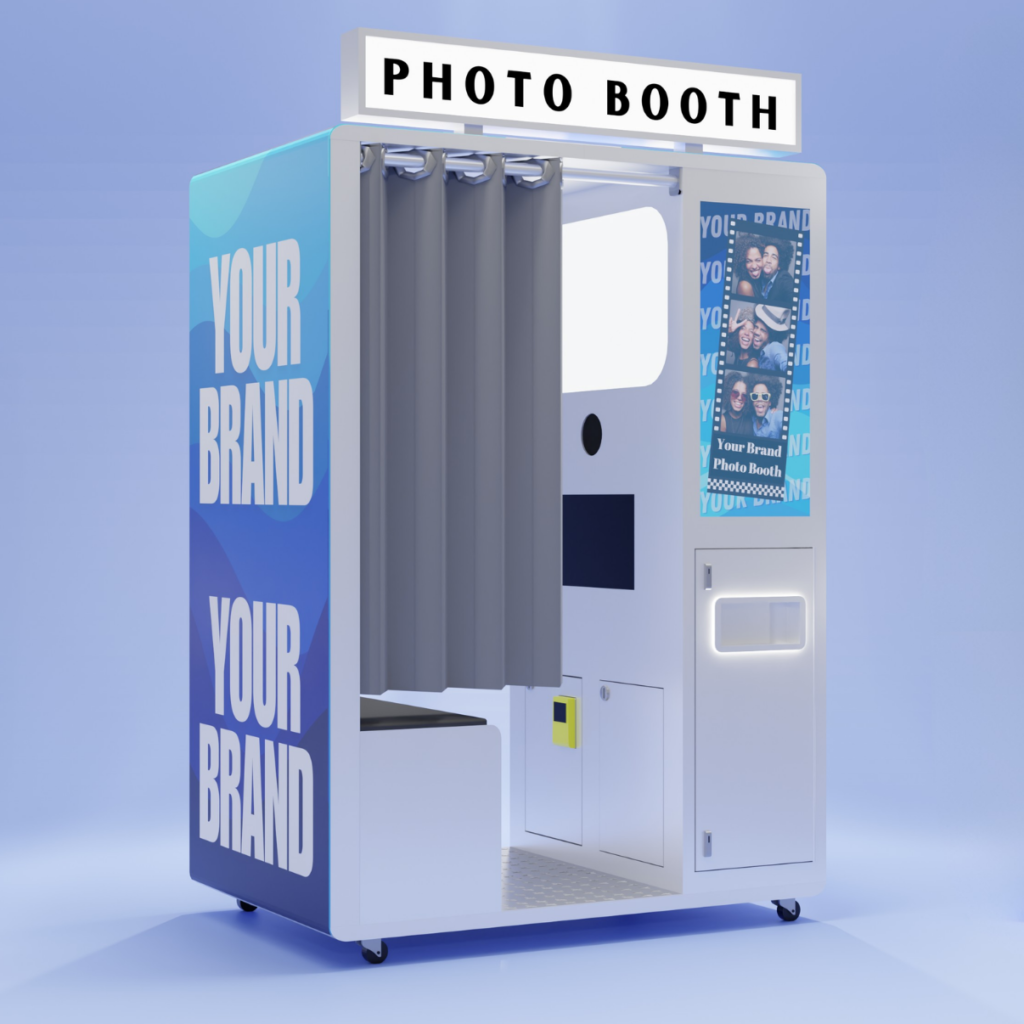
The standard advice for anyone shopping a photo booth machine for sale is to buy the best camera you can afford. That advice is wrong, or at least it is answering a question almost nobody has. Cameras in this category are all good enough now. What actually decides whether a machine earns money is the cabinet around the camera, the payment terminal bolted into it, and whether anyone answers the phone when it stops working. So this is a guide to reading listings, not to reading spec sheets.
Four different markets hide behind one search term
Type the phrase into Google and the results blend products that have almost nothing in common. Sorting them first will save you weeks.
- Event rental kits. A tripod, a shell, a tablet. Built to travel and to be run by a person. Cheapest by a distance.
- Imported cabinets. Container freight from overseas factories, often sold through a middleman who has never opened one.
- Refurbished vintage units. Genuine old machines, sometimes converted to digital. Charming and demanding.
- Purpose built commercial cabinets. Made to stand unattended in a public building. Fewest sellers, highest price, and the only category that suits permanent placement.
Most disappointed buyers I have spoken to bought from category one while picturing category four. Therefore the useful first question is not what does it cost, but which of these four am I actually looking at.

How to read a photo booth machine for sale listing
Listings in this category are written to flatter. A few habits cut through the copy quickly.
Look at the photographs of the back and the inside, not the front. Every seller has a beautiful front shot. Far fewer will show you the service side, and the ones who will not are usually hiding a rat’s nest of consumer parts. Similarly, look for a photograph of the machine somewhere real. Renders and white background studio shots tell you the cabinet exists as a file, though not that it exists as a product.
Then read what the listing does not say. Weight is often missing because the answer creates freight problems. Lead time is often missing because the honest answer is months. Service terms are usually missing entirely.
Want a listing you can actually interrogate? We build the SmileMore Classic in South Florida and we will show you the inside of one. Ask for a quote.
What imported cabinets tend to get wrong
I want to be fair here, because some overseas factories build a decent shell. The problem is rarely the metalwork. Instead it is everything that has to work in your country: the payment terminal, the plug, the printer your consumables supplier actually stocks, and the software licence.
An imported machine frequently arrives with a payment module intended for a different market. Replacing it means opening the cabinet and rerouting power. It also voids whatever warranty existed. Meanwhile the printer inside may take a media size nobody near you stocks. Every consumable order then becomes a special order. These are not exotic failure modes. They are the normal ones.
Vending machines have solved this problem for a century. That is why the unattended payments industry looks the way it does. If you are curious about the lineage, the history of the photo booth is genuinely worth ten minutes, since almost every design decision in a modern cabinet was made first in 1925.
Lead time is the number nobody quotes
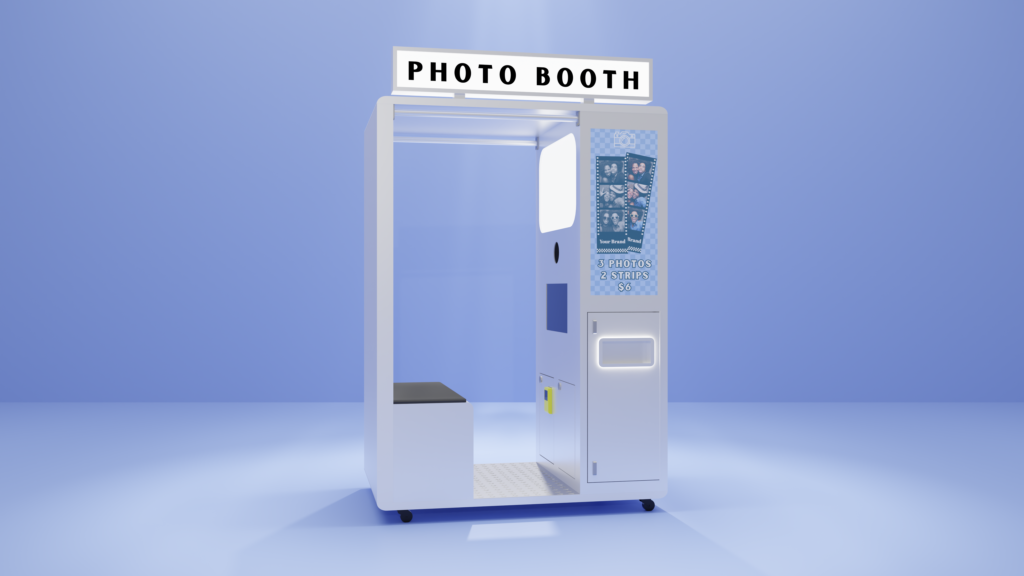
Every photo booth machine for sale should come with a delivery date in writing, so ask for one. Cabinets are built in batches, wraps are printed to order, and payment terminals get provisioned by a processor on their own schedule. Our own first machine took months of planning before anything was produced, and then it was built and tested in my office before it went anywhere.
When it finally moved, every panel travelled individually wrapped. That sounds fussy until you have seen what a scuffed corner does to a machine that is meant to look permanent in somebody else’s lobby. Delivery is not a shipping problem. It is the last stage of manufacturing.
The costs that arrive after the machine does
The purchase price is the line everyone compares. Yet the running lines are what decide whether the machine is still worth owning in year two, and sellers almost never lay them out. Here is the honest list.
| Cost line | How often | Easy to forget? |
|---|---|---|
| Print consumables (paper and ribbon) | Per print | No, but people underestimate the volume |
| Payment processing fees | Per transaction | Frequently |
| Connectivity for the machine | Monthly | Yes |
| Software licence or subscription | Monthly or annual | Yes, and it can be the one that stings |
| Service visits and callouts | Irregular | Almost always |
| Exterior wrap refresh | Every few years | Yes |
Notice that only the first line scales with success. Consequently a machine in a quiet room still costs you money every month, which is the real argument for being fussy about where it goes.
What the machine has to do once it is yours
A cabinet that photographs well is not the goal. A cabinet that takes payment from a stranger at midnight, with nobody present, is the goal. In our first public install the guests who came back with friends were the ones who had already had a clean session. A clean session means the payment worked, the print landed fast, and nobody had to guess which button to press.
That last point cost us a week. Guests hesitated at the opening screen. The problem was invisible in conversation and obvious the moment we stood back and watched, so we added start guidance on screen. Little of that is visible in any listing you will read.
Frequently asked questions
Is a cheaper imported cabinet ever the right call?
If you are testing an idea and can absorb the machine being a write off, possibly. For a placement you intend to keep for years, the savings usually get spent twice over on payment and printing problems.
Should I buy one machine or several?
One, and run it somewhere real for a full quarter before ordering more. Nearly every assumption we held about guest behaviour changed within three weeks of going live.
How long should I expect to wait for delivery?
Longer than you are told. Get the date in the contract and ask what happens if it slips.
Can I see a machine before committing?
Ask. Any manufacturer worth buying from will either have one nearby or arrange a video walkaround of the service side.
Get a quote and a lead time in writing. Tell us where the machine is going and how you want it finished, and we will come back with both. Start here.
If you would rather a venue host a machine than own one, our permanent photo booth installation page covers that route. For what goes inside the cabinet, see our photo booth equipment list.
Before you commit, work out whether the seller is a manufacturer or a reseller. If a bargain has caught your eye, read what to check on a used machine first.