
Most lists of the best photo booth to buy rank cameras and screens. That is the wrong place to start. The best photo booth to buy for business is the one that matches who runs it. If you sell hours at weddings and parties, you want an attended event rig that packs into a car. If the booth will live in a venue and sell sessions to guests, you want a self-service machine with a cabinet, a card reader and software that runs without you. Get that choice right and the spec sheet mostly sorts itself out.
This guide covers both, then gets specific about the second, because that is the one we build. For a closer look at that category on its own, read what makes a commercial photo booth different.
Start with who runs the booth
In fact, two very different businesses hide behind the same search. One bills the host for a block of time. The other bills each guest for a session. They need different hardware, and buying the wrong one is the most expensive mistake in this category.
| Event rental booth | Self-service booth | |
|---|---|---|
| Who pays | The host, for a block of hours | Each guest, per session |
| Who runs it | An attendant, every booking | Nobody; it takes payment on its own |
| Where it lives | In a van between events | Installed in one venue |
| What it must survive | Loading, unloading and setup | Thousands of strangers pressing buttons |
| What a failure costs | One event you cannot rerun | One refunded session |
That last row is why we left rentals. A wedding only happens once, so when an event rig fails, a refund does not fix it. In contrast, when a self-service machine fails, one guest gets their money back and nobody’s night is ruined. Consequently, the buying criteria flip. An event buyer pays for portability. A venue buyer pays for reliability and for being left alone.
What the best photo booth to buy for business has inside
Once you know the job, the parts list is short and fairly standard across the good machines. The differences are in how they are put together.
Camera
A Canon DSLR or mirrorless body is the safe choice because almost every serious software package supports it. Tablet booths are cheaper and fine for digital sharing; however, guests notice the difference in a printed strip. Bodies and lenses get a fuller treatment in our camera buying notes for photo booths.
Printer
Nearly every commercial booth in the US prints on a DNP dye-sublimation printer. Ask which model is inside, because it decides your prints per roll and how fast a line moves. Our photo booth printer guide compares the three that matter.
Payment
An unattended booth needs to take cards. The clean way to do it is a vending-grade reader wired through the MDB protocol, the same standard snack machines use. Readers taped to the side of a cabinet, however, are a warning sign. We explain the wiring in how a Nayax reader talks to a photo booth.
Enclosure and software
Look for a metal cabinet, a curtain, ventilation and a footprint that fits through a real doorway. Also check that the software is built for kiosks rather than adapted from event mode. If you are unsure what that means, our post on unattended photo booth software lists what to test.
If you would rather see one than read about one, we will walk you around the inside of a SmileMore Classic. Ask us for a quote and say what room it is for.
Where to buy a photo booth
There are four honest routes, and each suits a different buyer.
- Direct from a manufacturer. You pay more than a marketplace listing, but you get a warranty, parts and someone to call. Read what to ask a photo booth manufacturer before you sign.
- An importer or reseller. Often the lowest new price. Service is where these deals tend to fall down, so ask who repairs it and how fast.
- The used market. Good for event rigs, riskier for kiosks, since payment hardware and software licences rarely transfer cleanly. See our used photo booth buying notes.
- Building it yourself. Cheapest on paper and a real education, although your time is the hidden cost.
Questions to ask any seller before you pay
A good seller answers these without hesitating. A vague answer to any of them is useful information too.
- Exactly which camera and printer are inside, by model?
- Who services it, and what happens the week a part fails?
- Does it fit through a 33 inch doorway, and will you measure the route?
- Is the card reader wired in properly, and who processes the payments?
- Do I own the software licence, or rent it every month?
- How are refunds handled when a session fails?
Buying a booth for a venue, not a van?
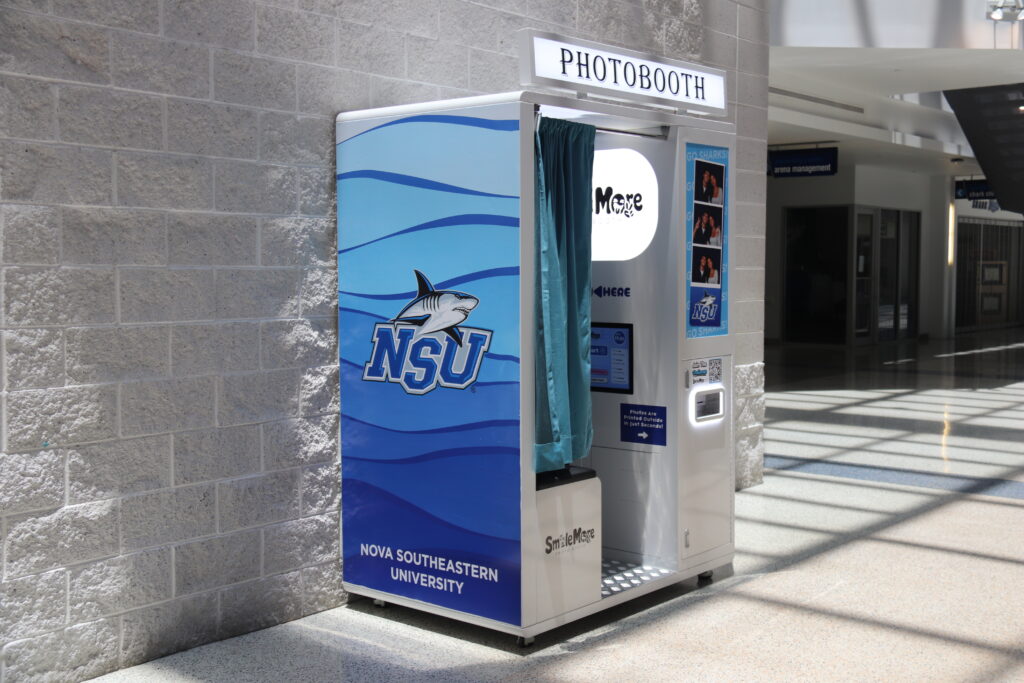
We build the SmileMore Classic for exactly that job: a metal cabinet that clears a standard doorway, a Canon camera, a DNP printer and card payment wired in. Tell us about the room and we will quote it properly.
What our first machine taught us about buying
We learned this on our own first machine, installed at NSU’s university center in August 2026. Over its opening month, guests paid for well over 300 sessions, most of them at $7.99, and nobody stood beside it. The two compliments we heard most were camera quality and print speed. So the parts list above is not theory; it is what guests actually noticed.
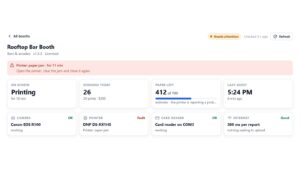
It was not flawless, either. A hardware fault in the opening weeks meant refunding guests whose sessions did not finish. Every one of those refunds showed up in the payment record, which is exactly why reporting and payment integration belong on your buying checklist. Meanwhile, the change that helped most was small: clearer guidance on the first screen, because people hesitated over what to press.

When buying is the wrong move
Here is the honest-interest note. We build and sell the SmileMore Classic, so weigh our advice with that in mind. Even so, plenty of businesses searching this phrase should not buy at all.
If you own a bar, restaurant, campus or hotel and simply want a booth in the room, you do not need to buy one. Instead, a placement partner installs, services and restocks it, and the venue pays nothing. That is the other half of what we do, and permanent photo booth installation in Florida explains how it works. If that is you, the steps are laid out in how to get a vending machine into your business.
Buying makes sense when you want to own the asset and run the route yourself. In that case, the best photo booth to buy for business is the machine that will still be working, unattended, a year from now.

Buying questions we hear most
Is it better to buy an event photo booth or a self-service one?
It depends on who pays. If hosts book you by the hour, buy a portable event rig. If guests will pay per session in a venue, buy a self-service machine with a card reader and kiosk software.
Where should a first-time buyer get a photo booth?
Buy from a seller who will service it. For an event rig, a reputable reseller or a lightly used unit is reasonable. For an unattended machine, buy direct from a manufacturer so parts and support come with it.
Does a business photo booth need a card reader?
Only if it runs unattended. An event booth is paid for in advance by the host. A self-service booth has no attendant, so it needs a vending-grade reader wired into the software.
Can I start with one booth and add more later?
Yes, and that is the sensible way to do it. Learn how one machine performs in a real room before committing to a second, then buy the same model so parts and software stay consistent.
So which job is your booth actually for? Answer that first, then see what each kind of booth costs to buy, or ask us to quote a Classic for your room. For the hardware standard most of this industry prints on, see DNP’s photo printer range.