

Twenty sessions ended up refunded on our first machine, after a fault surfaced during its opening weeks. Another twenty card attempts never authorised at all. I lead with that because photo booth repair is the part of this business nobody advertises, and because any supplier telling you their machines do not fail is either very new or not being straight with you. Machines fail. What separates a good arrangement from a bad one is entirely about what happens next, and how long it takes.
What actually breaks, in order
The ranking surprises people, because it is almost the reverse of what they worry about when buying.
- Consumables and the paper path. Comfortably the most common. Paper runs out, ribbon runs out, a strip occasionally catches on the way out.
- Payment. Not usually the terminal itself. More often a network problem, a card the machine cannot authorise, or a settlement issue that needs sorting from the office.
- Software. A session hangs, or the machine needs to get itself back to a clean start screen after an interruption.
- The computer and camera. Rare, and when it happens it is usually heat or a loose connection rather than a dead component.
- The cabinet. Almost never. Steel does very little.
Notice that the top two categories account for most incidents and neither requires a specialist. Consequently the design question is not how do we prevent failure, but how fast can somebody restore service, and can the machine keep taking money in the meantime.
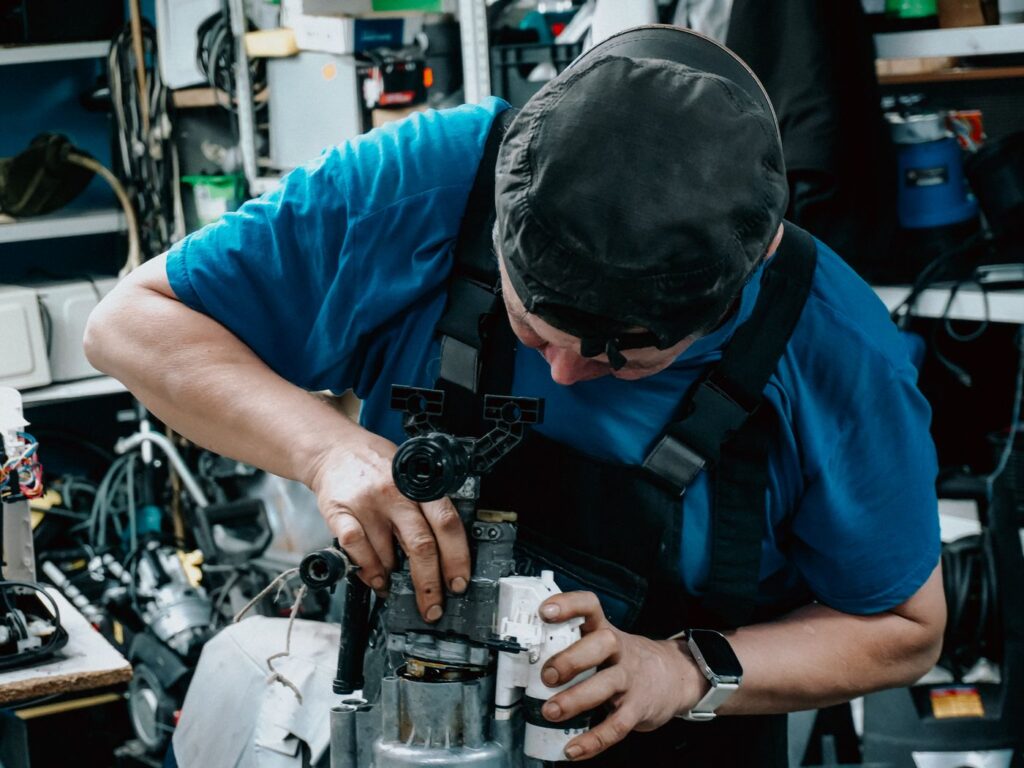
The one we got wrong
Our opening fault produced refunds, which is the worst category of failure because the guest has already paid. They do not care whose fault it was. They know the venue put a machine in the lobby and it took their money.
That is the real cost of a repair problem, and it is not the repair. It is the venue’s relationship with its own customers. Any operator who does not understand that will eventually cost a venue more than the machine earns it.
What we changed afterwards was less about the hardware than about detection. Knowing quickly matters more than fixing quickly, since a machine that reports its own fault can be taken out of service before it collects money it cannot deliver against.
What “we service it” should mean in writing
The phrase is used loosely. Before agreeing to host a machine, get these pinned down.
- Who attends. A named operator, or a third party contractor they have never met?
- How fast. An actual commitment, in hours or days, not a promise to be responsive.
- How faults are detected. Does the machine report itself, or does it rely on your staff noticing and calling?
- What happens to a guest who paid and got nothing. Refunds should be the operator’s problem and should not involve your team.
- Who restocks. Paper and ribbon should never appear on a venue’s job list.
That third point is the one most people skip and it is the most revealing. Remote monitoring turns a two week outage into a two hour one, purely by removing the delay between the fault happening and somebody knowing about it.
Hosting a machine and want the service terms in writing? Ask us for ours before you commit to anything. Get in touch.
Response time is the number that matters
Every hour a machine is dark costs both parties, though not equally. The operator loses revenue, which is recoverable. Meanwhile the venue loses something harder to price, because a broken machine in a public space reads as neglect and it reflects on the building rather than on the operator.
So the response commitment is worth more scrutiny than any specification. Ask what happened the last time a machine went down, how long it took, and how they found out. A supplier with real field experience answers that easily and with specifics. Vague answers usually mean it has either never happened or never been measured, and neither is reassuring.
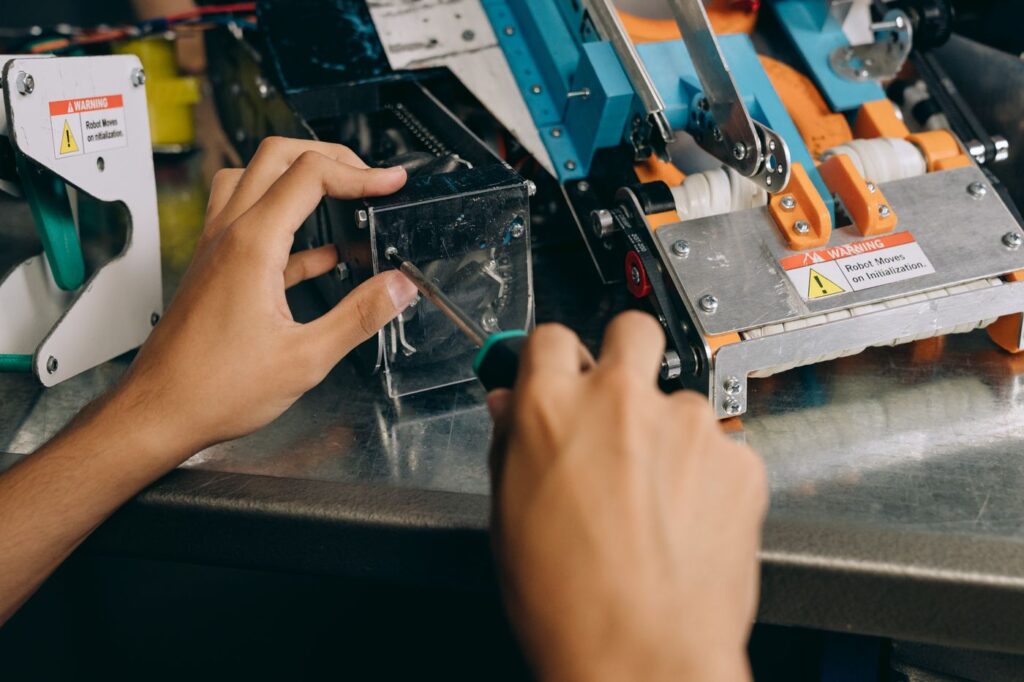
What venue staff should never be asked to do
A short list, and any operator asking for more than this is transferring their costs onto your payroll.
Venue staff should not change consumables, clear paper paths, handle guest refunds, move the machine, or troubleshoot anything. It is reasonable to ask them to tell the operator when something looks wrong, and to let a technician in during opening hours. That is the whole list.
Our own arrangement follows that line, and it is written down rather than assumed. The moment a venue’s team is doing operational work on a machine they do not own, the arrangement has quietly changed into something they did not agree to.
Preventive service beats reactive repair
Most of what goes wrong is predictable, which makes it schedulable. Preventive maintenance is a well worn discipline in every other equipment category and it applies neatly here.
Restock before the roll runs out rather than after. Clean the paper path on a schedule. Check the payment terminal settles correctly rather than assuming it does. None of that is difficult, though all of it requires somebody to actually visit on a rhythm set by print volume rather than by the calendar, which is why a busy site needs more attention than a quiet one.
A realistic photo booth repair schedule
Since most incidents are predictable, most of them can be scheduled away. This is roughly how the rhythm looks on a machine in a reasonably busy public site.
| Task | Driven by | Who does it | If it slips |
|---|---|---|---|
| Restock paper and ribbon | Print volume | Operator | Machine stops selling, which is the correct behaviour |
| Clean the paper path | A set interval | Operator | Jams become frequent |
| Verify payments settle | Weekly | Operator, remotely | Revenue looks fine and is not |
| Check the guest flow end to end | Every visit | Operator | Small faults go unnoticed for weeks |
| Wipe down and tidy the exterior | Frequent | Operator, though venues often help | Machine reads as abandoned |
| Review where sessions are dropping off | Monthly | Operator | Nobody learns anything |
That last row is not repair in the strict sense, though it belongs on the list. Watching where guests abandon a session catches problems that never register as faults, and those are the ones that quietly cost the most.
Frequently asked questions
How often should a machine realistically need attention?
Restocking follows print volume rather than a calendar. Genuine faults should be rare, and if they are not, something in the machine or the site needs changing.
Can a machine keep working with a faulty printer?
It should stop selling rather than take money it cannot deliver against. A machine that keeps charging while it cannot print is a design failure.
Who pays for a repair in a hosting arrangement?
The operator, in full. If a venue is being asked to contribute to fixing equipment it does not own, read the agreement again.
What about damage caused by guests?
Worth agreeing in advance. In practice it has been rare, since a machine that looks permanent and maintained tends to be treated as furniture.
We fix our own machines, and we put the response commitment in the agreement. The venue never touches paper, payments or refunds. Ask what our terms look like.
On the parts most likely to need attention, we have written separately about printers and about software crashing. For how placement works, read permanent photo booth installation.
Liability and cover are handled separately in who covers what in your venue. For why unattended machines are built the way they are, read running without staff.