
The measurement that stops an installation is almost never the floor. Venues ask about photo booth dimensions meaning the footprint, then discover on delivery day that the machine will not pass the doorway, or that the only spot with space is the one nobody walks past. Footprint is the easiest number to satisfy and the least likely to be the problem. Five measurements actually decide whether a booth can live in your room, and four of them have nothing to do with how much floor it covers.
The five measurements that matter
- Narrowest doorway on the route. Not the front door. The narrowest point anywhere between the loading area and the final position, including any lift.
- Ceiling height along that route. Sloped car park entrances and low soffits catch people out more often than door frames do.
- Footprint at the destination. The easy one, and worth measuring twice anyway.
- Service clearance. Whatever space is needed to open the machine and reach the paper path without dragging it away from a wall.
- Standing room in front. Guests queue, take photographs of each other queuing, and wait for prints. That space is part of the installation whether you planned it or not.
Take those five to any supplier and the conversation becomes quick and factual. We will give exact machine measurements for a specific site on request, since the sensible order is to measure your room first and match a cabinet to it rather than the reverse.
Doorways cancel more installs than floors do
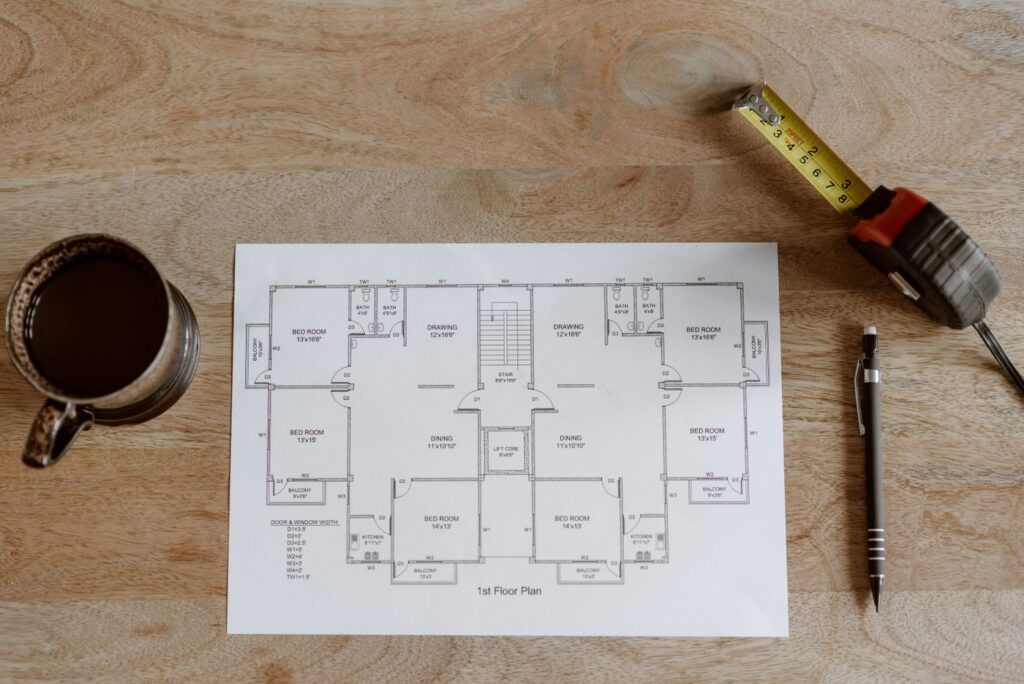
An enclosed cabinet is a rigid object. Unlike a folding event setup, it cannot be narrowed for the journey, so every doorway, turn and lift on the route is a hard constraint rather than an inconvenience.
Walk the route yourself before anybody quotes. Start where a van can park and follow the path a machine would actually travel. Measure the narrowest point, note every turn, and check whether any threshold has a step. A single step is usually solvable. A tight ninety degree turn in a narrow corridor frequently is not.
Lifts deserve particular attention, since the constraint is the door aperture rather than the car interior, and the two are rarely the same.
Service clearance is the one everybody forgets
A machine flush against a wall looks tidy and creates a problem. Somebody has to open it to change paper, clear the paper path and check the payment terminal, and that access has to work without moving the cabinet every time.
Good design puts the service access on the front or the side rather than the back, which removes the issue entirely. Still worth confirming, because a machine that needs pulling out for every consumable change will eventually stop being serviced properly.
Not sure whether your space works? Send a photograph and rough measurements and we will tell you honestly, before anyone talks about installing anything. Ask us.
What a real site condition looks like
August 2026 saw us place a machine inside a university building for the first time, sited against a column next to the lifts. The environmental health and safety team set one condition that shaped everything: the machine had to remain movable, and if it needed relocating we would move it rather than facilities staff.
That single requirement changed the specification. Casters became mandatory rather than convenient. It also changed the placement conversation, since a movable machine is a far easier thing for a building to approve than a fixed one. Anyone planning an install in a managed building should expect a similar condition and should raise it early rather than discovering it during approval.
A checklist you can take round the building
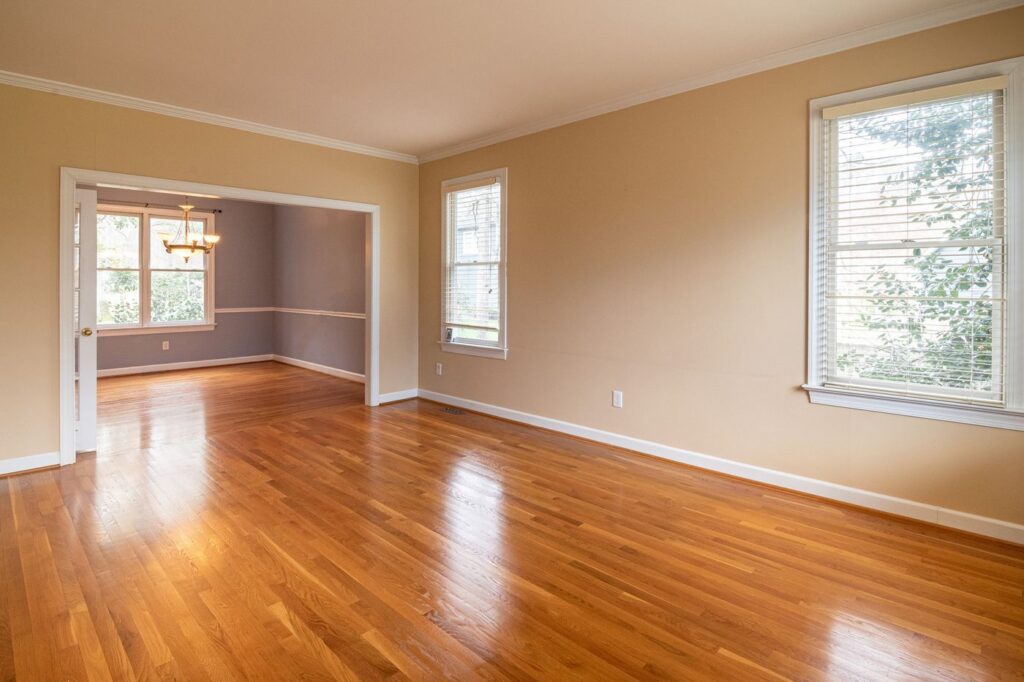
Print this, walk the route, and fill it in. It takes about fifteen minutes and it prevents the two failure modes that cost everyone a wasted delivery.
| Measure | Where to take it | Fails when |
|---|---|---|
| Narrowest aperture on the route | Every door, gate and lift between the street and the spot | Anything narrower than the cabinet, with no alternative route |
| Lowest overhead on the route | Car park entrances, soffits, door heads | The machine cannot pass upright |
| Turns and corridor widths | Any corner the machine must round | A tight turn in a narrow corridor |
| Thresholds and steps | Entrances and lift lips | More than a modest step with no ramp available |
| Destination footprint | The chosen wall or column | Rarely, and it is the one everybody checks |
| Standing room in front | The approach to the machine | Guests would block a walkway |
| Power outlet | Within reach of the position | Shared with something critical, or too far |
Notice how far down the list the footprint sits. Photo booth dimensions in the catalogue sense are the last thing to worry about, whereas the route and the standing room are where installations actually fail.
Queue space and traffic flow
Two rules cover most of it. Guests should be able to gather in front of the machine without standing in a walkway, and the machine should be visible from wherever people already pause.
Corridors fail both tests. People move through corridors and do not stop, and anybody who does stop obstructs everyone else. Lobbies, landings and the wall a queue already faces work far better, and they work for the same underlying reason: those are places where standing still is already normal.
Accessibility matters here too. Leaving a clear approach path is both good practice and, in many buildings, a requirement, so it is worth reading your obligations under the Americans with Disabilities Act rather than assuming.
Assessing a spot in ten minutes
Stand where you are considering putting the machine and answer four questions. Can somebody see this from where they naturally stop and wait? Is there room for a group of four to gather without blocking anyone? Is there a power outlet within reach that is not shared with something critical? Could a heavy object on wheels get here from the street?
If all four answers are yes, the spot is viable and the exact photo booth dimensions become a detail rather than a problem. If any answer is no, fix that before comparing machines, because no cabinet specification rescues a bad location.
Frequently asked questions
Does the machine need to be bolted down?
Usually not, and in managed buildings it is often better that it is not. A movable machine is easier to get approved and easier to reposition if the first spot underperforms.
Who is responsible for moving it once installed?
In our arrangements, we are. Venue staff should never be asked to shift a machine, and that expectation is worth writing down.
What if the only viable spot is against a wall?
Fine, provided service access is on the front or the side. Confirm that before agreeing to the position.
How much room do guests actually need?
Enough that a small group can stand together without stepping into a walkway. If people have to move aside for passing traffic, the spot will underperform.
Want a machine in your venue without buying one? We own it, install it, service it and keep it stocked. The venue provides the space and a power outlet, and pays nothing. Find out what that looks like.
More on how this works in practice: permanent photo booth installation, plus the venue specific arguments for bars and restaurants.
Still deciding on a style for the space? Compare open air and enclosed. Once a spot is chosen, who pays for what covers the commercial side.