
Trivia night works. That is the honest starting point, because a good host in front of a decent crowd will fill a Tuesday that would otherwise run half empty. Most bar entertainment ideas lists stop there and hand you twenty more options ranked by how fun they sound. In practice the ranking that matters is a different one. What does this cost every week it runs? How many staff hours does it eat, and does it still work on a night nobody is running it? Below is that ranking, plus the table I built it from.
If a fixture is what your room needs, our permanent photo booth installation page covers what we put in and what the venue keeps.
The four questions I score every idea against
Entertainment rarely fails because guests hated it. It fails because the owner quietly stops running it around week six, when the novelty has worn off but the host fee has not. So score the idea before you buy it.
- Upfront cost. What leaves your account before a single guest touches it.
- Staff hours per week. Setup, teardown, promotion, and a manager who has to care about it on a night the floor is already short.
- Does it run when you are not there. Some ideas are events. Others are fixtures.
- Does it earn directly. Most entertainment earns indirectly, through drinks. A small number earn on their own.
That third question is the one that decides everything. An idea that needs a person in the building is a promotion, and promotions compete with every other job your staff has that night. A fixture, by contrast, keeps working on the nights you forgot about it entirely.
Want a straight answer on whether a fixture belongs in your room? Tell us what your Friday looks like and we will say so before anyone discusses equipment.
Bar entertainment ideas, scored side by side
Costs vary by market, so treat the money column as relative rather than absolute. The two that hold up in every bar I have walked into are staffing and whether it runs unattended.
| Idea | Upfront cost | Staff hours a week | Runs unattended | Earns on its own |
|---|---|---|---|---|
| Trivia or quiz night | Low, then a host fee every week | 4 to 6 | No | No |
| Live music | Medium to high per booking | 3 to 5 | No | No |
| DJ | Medium per night | 2 to 4 | No | No |
| Karaoke | Equipment, then a host | 3 to 4 | No | No |
| Darts, pool, shuffleboard | Medium, one time | Under 1, maintenance | Yes | Yes, if metered |
| Arcade or claw machine | Nothing if placed | Under 1 | Yes | Yes, revenue share |
| Themed pop-up nights | Low to medium per event | 6 or more with promotion | No | No |
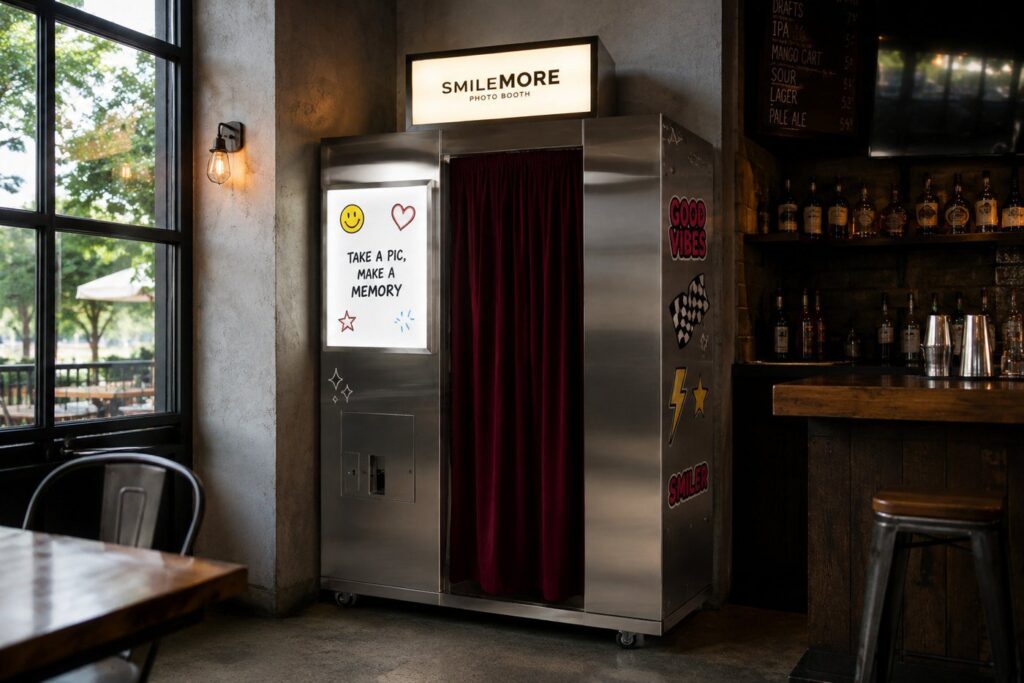
| Permanent photo booth | Nothing if placed | Under 1 | Yes | Yes, revenue share |
I build and place the machine in that last row, so read that row with the suspicion it deserves. Still, the rows above it are not a setup. Coin-operated games and arcade equipment are the closest competition to what I sell, and in a room with real floor space they sometimes beat it.
Bar event ideas, pub entertainment ideas and bar game ideas solve different problems
Search for bar entertainment ideas and all three come back in the same list, even though they do different jobs. Bar event ideas produce a spike on one night, and the next one has to be promoted all over again. Pub entertainment ideas that live permanently in the room work the opposite way: no promotion, smaller peak, seven nights instead of one. Bar game ideas sit in that second category and add competition between guests, which is why they hold groups in place.
Pick based on which problem you actually have. A specific dead night is an event problem. A busy room that nobody remembers on Monday is a fixture problem, and running another event will not fix it.
What every idea on this list is really competing for
The return on entertainment is not settled on the night you run it. It is settled by whether anyone walked out with proof they were there. That proof is what brings the group back and what brings their friends the first time.
The wider market has already priced this in. JLL counted 217 million visits to location-based entertainment venues in 2025, about 12 percent above 2019, with 721 more locations planned. People are choosing rooms that give them something to do rather than only something to drink.
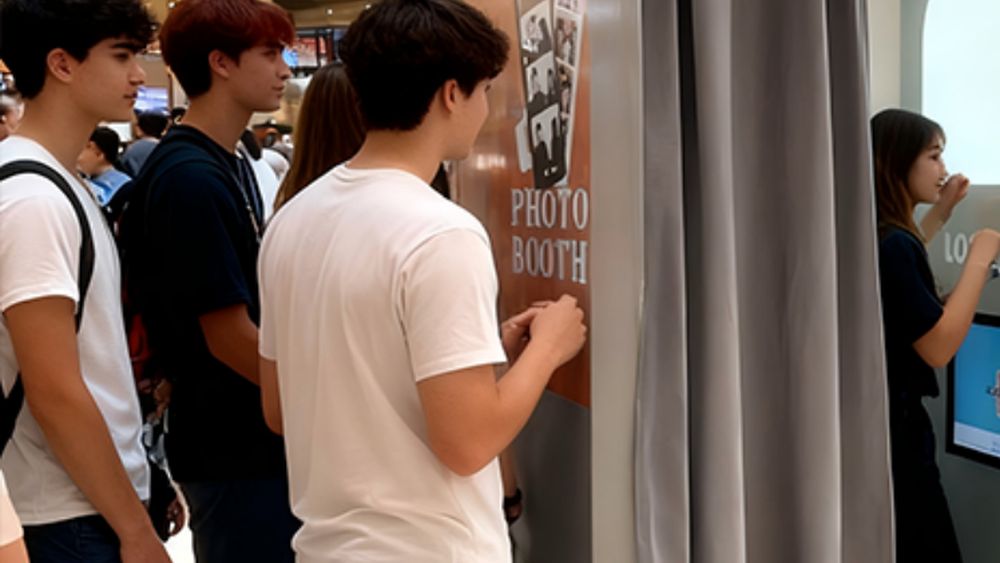
Judge your options that way and the ranking shifts. A band gets filmed for roughly four minutes of a three-hour set. A quiz produces a winner and a photo of a chalkboard. Meanwhile a machine that hands over a printed strip gets photographed every single time, and the strip walks out of the building in somebody’s pocket.
What an unattended attraction actually produced
Our first permanent machine went into the Nova Southeastern University Center lobby this month. In its first month it ran more than 300 sessions. Most texted themselves a copy as well, on top of the strip they had already printed. The machine did all of it with nobody assigned to it.
That is a campus lobby, not a bar, and the traffic pattern is not the same. As a result I would not turn it into a projection for your Friday. What it does prove is narrower, and more useful. An attraction people pay for themselves can run a full week without staffing, without a host, and without anyone promoting it. The full week one breakdown is here.
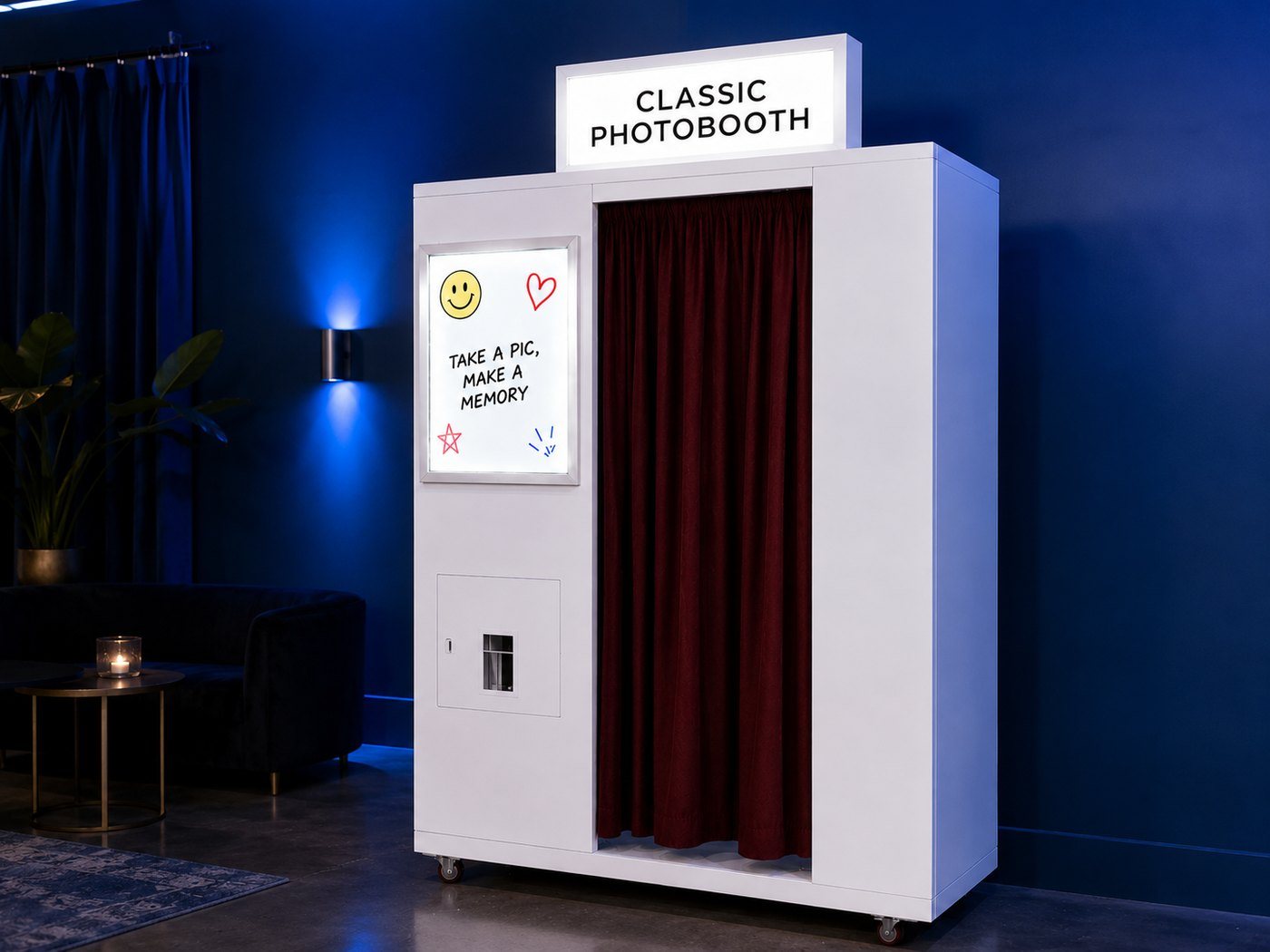
For years I sold the rental version of this. Then a manager I was pitching told me the venue already had a photo booth, and the thing he pointed at was a vending machine. Rentals bill the host. Vending bills the guest. A venue does not want to pay for entertainment and then go market it. That is the entire reason I stopped selling the first model and started building the second.
Wondering where a fixture would go in your bar? Every SmileMore machine is built in house, and we install across Broward, Miami-Dade and Palm Beach. Send us a photo of the room and we will tell you if it works, including when the answer is no.
What I would do in a South Florida bar this fall
Corporate party bookings for December get decided in September and October. As a result, the version of your room a planner walks through in three weeks is the one they book or forget. Instead of adding another promoted night to that stretch, I would make the room itself worth photographing, then keep the events for the nights that genuinely run empty.
Two things worth reading next. First, the questions to ask any company that offers to place equipment in your bar. Second, the argument for competing on memorability when you cannot compete on price.
Questions bar owners ask
What is the cheapest bar entertainment to run?
Anything placed by an outside operator, because the equipment cost sits with them. Coin-operated games, jukeboxes, arcade cabinets and photo booth machines all work this way. You supply floor space and power.
Do bar games actually increase sales?
They increase group size and how long groups stay together in one spot, which is what actually moves the drinks. A darts league or a pool table is worth more on a slow weeknight than on a busy Saturday, when floor space is already the thing you are short of.
How often should a bar change its entertainment schedule?
Give a recurring night eight weeks before judging it, because attendance in weeks one and two tells you about your promotion rather than the idea. Fixtures are different, since they get discovered gradually by people who were coming anyway.
What works on a genuinely dead weeknight?
A hosted event, almost always. Fixtures earn on the nights you already have traffic, so a Tuesday with nine people in the room needs a reason to show up, not a reason to stay.
One rule covers all of it. If an idea only works when you are in the building, it is a promotion. If it works when you are not, it is an attraction. Both are worth running, and the mistake is paying for one while expecting the other.
If a photo booth is the fixture you want to test, here is exactly what we ask of your venue and what you keep.