

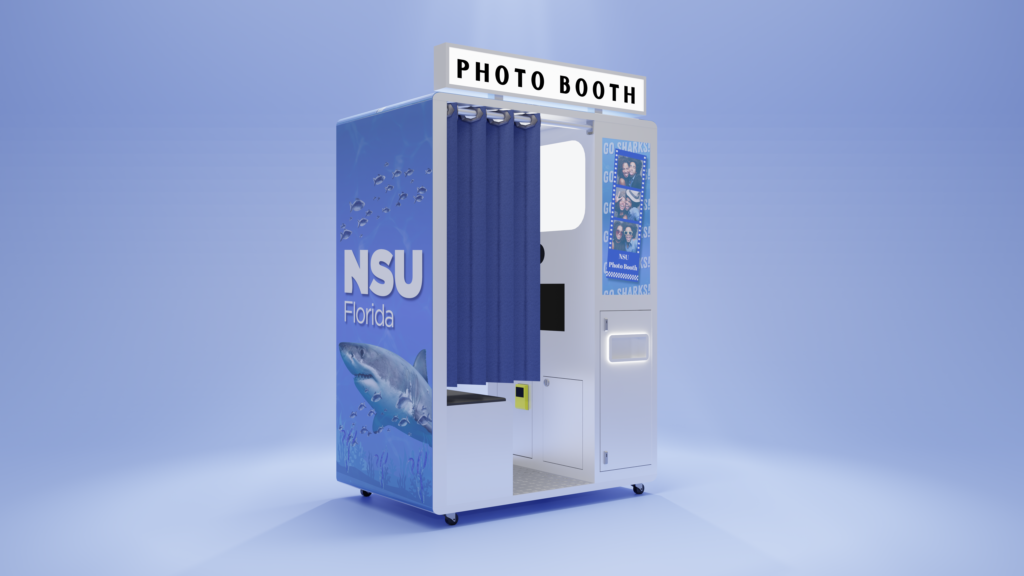
Almost nobody searching for a coin operated photo booth actually wants coins. They want what coins used to signify: a machine that takes payment from a stranger and works on its own, with no staff, no booking and no app. That is a reasonable thing to want and it is very much still available. The coin mechanism itself, however, is now the least attractive part of the design, and understanding why saves you from buying a machine built around a problem rather than a solution.
What the phrase used to mean
The original machines were genuinely mechanical. Drop a coin, a switch closes, the sequence runs, and the strip develops inside the cabinet. There was no computer to crash and nothing to configure. Whoever maintained it emptied a cash box and refilled chemistry.
That lineage is why photo booths sit alongside jukeboxes and vending machines in most people’s minds rather than alongside cameras. The category was always about unattended commerce first and photography second, which is worth remembering when you compare modern machines.

Why coins became a liability
Four problems, and they compound.
- Guests do not carry cash. In a bar, most people have a phone and a card and nothing else. A coin only machine turns them away silently.
- Cash has to be collected. Somebody drives to the machine on a schedule regardless of how busy it has been.
- Cash boxes attract attention. A machine known to hold money carries a different risk profile from one holding none.
- You lose all visibility. Coins tell you nothing until collection day, whereas card transactions report themselves in real time.
That final point is underrated. Knowing on a Tuesday that Friday is your strongest day changes where you place the next machine. Waiting a fortnight to count coins tells you the same thing much later and much less precisely.
What replaced the coin operated photo booth mechanism
Unattended card terminals took over, and they are a genuinely different class of hardware from the reader a market stall uses. An unattended terminal authorises, settles, retries and refunds without anybody present. That is exactly the set of behaviours a coin slot never needed to have.
Our own machines use terminals of that type. Over the first month at our first public installation, takings from guests came to roughly two thousand four hundred dollars, spread across upwards of three hundred paid sessions. Not one of those was a coin. Meanwhile twenty card attempts failed to authorise, which is the modern equivalent of a jammed slot and is at least something we could watch happening remotely.
Want the classic machine without the cash box? The SmileMore Classic keeps the shape and takes contactless payment. Ask us for a quote.
Coin, card or token: what each costs you
Payment choice is not a detail. It sets your collection routine, your visibility into the business, and how many guests walk away. Here is the comparison laid out.
| Coin | Unattended card | Arcade token | |
|---|---|---|---|
| Guests who cannot pay | Most, in a bar | Very few | Only those without tokens |
| Collection trips | Scheduled, regardless of takings | None, it settles to a bank | Handled by the venue |
| Live sales data | None until you count | Immediate | Depends on the token system |
| Price changes | Mechanical, awkward | A setting | A setting, usually |
| Theft exposure | Cash sits in the machine | Nothing to steal | Low |
| Refunding a guest | Impossible unattended | Straightforward | Venue handles it |
The refund row deserves a mention, since it only becomes obvious once something goes wrong. When our machine developed a fault in its opening weeks, twenty sessions were refunded. On a coin machine those guests simply lose their money and their opinion of the venue, and neither you nor the venue ever learns it happened.
When coins still earn their place
I do not want to write the mechanism off entirely, because real cases for it survive.
Arcades and family entertainment centres running token economies are one. If everything else in the room takes a token, a machine that does not becomes the odd one out, and guests already carry the currency. Museums and heritage venues are another, where the coin slot is part of the exhibit and revenue matters less than the experience being authentic.
Beyond those, the case thins quickly. A bar, a lobby, a campus building or a restaurant will do better on card, and it is not close.
Decide payment before you decide the cabinet
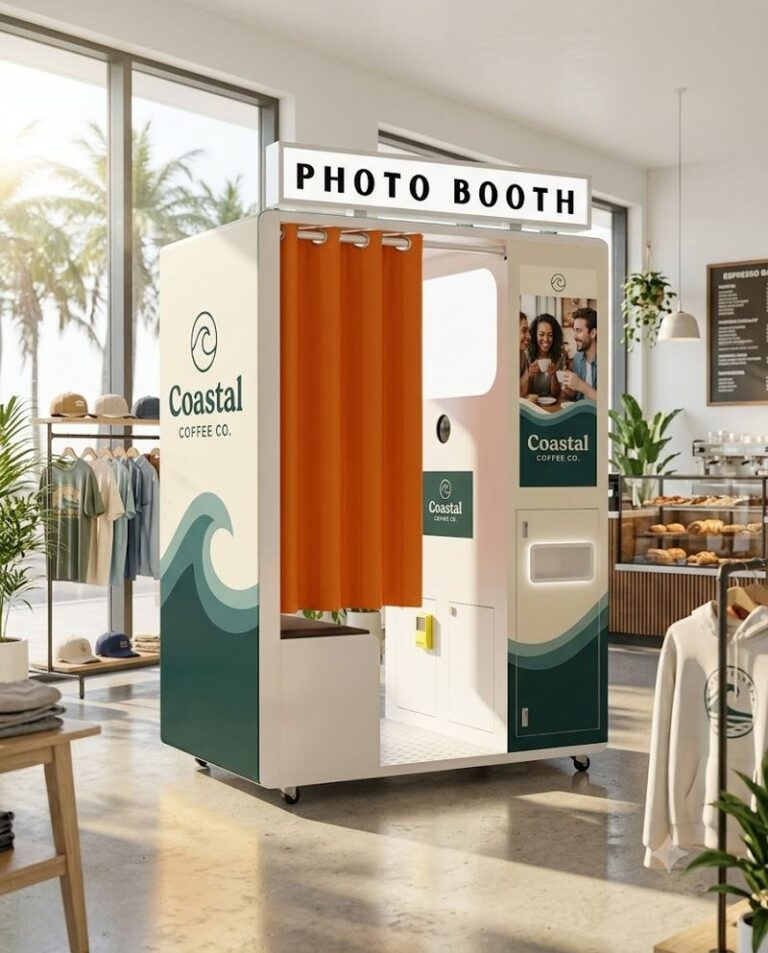
This sounds backwards, although it follows directly from how these machines are built. The aperture in the front panel is cut for a specific terminal. Consequently changing your mind later is metalwork rather than a settings change, and on a wrapped machine it also means reprinting graphics.
So settle three things early. First, who your guests are and what they habitually carry. Second, whether anyone will realistically drive out to collect cash, since good intentions fade by about week six. Finally, whether you need to see sales as they happen or can wait until collection day.
If your answers point to card, and for most venues they will, then a coin slot in the design is decoration at best. Meanwhile if you genuinely land on coins or tokens, say so before the cabinet is built rather than afterwards.
Keeping the character without the mechanism
Here is the part that surprised me. I assumed guests would notice and mind the absence of a coin slot, since the slot is such a strong visual signal of what the machine is. In practice nobody has mentioned it.
What guests respond to is the enclosure, the curtain and the strip appearing in a slot at the end. The payment step is something they want over with quickly, and a tap beats digging for change. So the character of a coin operated photo booth lives in its shape and its output rather than in its mechanism. You can therefore keep everything people actually like and drop the part that costs you customers.
If authenticity matters for its own sake, restore a genuine machine and enjoy it. Just do not expect the coin slot to be the reason anybody uses it.
Frequently asked questions
Can a machine take both coins and cards?
Yes, and some operators do it for arcades. It means maintaining two payment paths and collecting cash, so be sure the coin side earns enough to justify the round trip.
Do older machines still get converted to card?
Regularly. It is fabrication work rather than a plug in change, and the terminal usually needs a new aperture cut in the front panel.
Is contactless payment a problem for younger guests?
The reverse. Card and phone payment is the norm for that group, and cash is the friction.
What about token systems in arcades?
Workable. Check whether your token hardware supports the pricing you want before committing to it.
Placing a machine somewhere with real footfall? Send us the site and we will quote a cabinet finished for it. Get in touch.
On whether the format still lands with guests, see are photo booths still popular. For venues that would rather host than buy, there is permanent photo booth installation.
Wanting the genuine article rather than the shape? Head to restoration against reproduction. For how modern machines take payment unsupervised, try self service design.