


Florida does not hand you one card that says “vending machine license.” For a photo booth, though, the core paperwork is two items. You sign up with the Florida Department of Revenue so you can charge and remit sales tax on what the booth sells. Then someone secures any local business tax receipt your city or county requires for the machine. If you searched “vending machine license Florida” expecting a single form, the real answer is shorter and a little stranger. So here’s the full map, built for people buying a booth to run themselves.
A quick word before the details: we build and run booths, we aren’t your attorney or your accountant. Nothing here is legal or tax advice, so check your own situation with DOR or a licensed CPA.
The state filing: sales tax registration
The rule that governs vending sales is Florida Statute 212.0515. It’s short, but it matters more than any permit you’ll frame on a wall.
Read it once with coffee. In short, here’s what it means for a booth owner:
- Sales from vending machines are subject to Florida sales tax.
- The state organizes vending registration by county, so every county you operate in shapes your paperwork.
- Because guests pay one all-in price, the statute supplies divisors for backing the tax out of your receipts.
- Willfully ignoring the rules is a misdemeanor. So this is not a “deal with it later” item.
Then start the registration itself on the Department of Revenue registration page. Do it before the first paid session, not after the first good weekend.
The local filing: who gets the business tax receipt
This next part, however, surprises people. Florida Statute 205.0537 puts the duty on the host. The business whose premises hold the machines has to see that any receipt the city or county wants actually gets issued.
In other words, the statute points at the venue. If your booth lives in your own shop, that’s you. But if it lives in someone else’s bar, the bar has a stake in getting it right too.
The count also has a twist. The statute looks at the busiest day, meaning the highest number of machines standing there at once. So a venue with your booth and a claw machine on the same Saturday is counting two, even if one leaves on Sunday.
Also, your city and your county may each have their own rules. Call both offices, ask what applies to one photo booth, and write down the name of whoever answered.
Shopping for the machine at the same time? Then ask us about a SmileMore Classic, and we’ll show you how we set up our own booths.
Why a photo strip counts as a taxable sale
Guests think they’re paying for fun. The state sees a product.
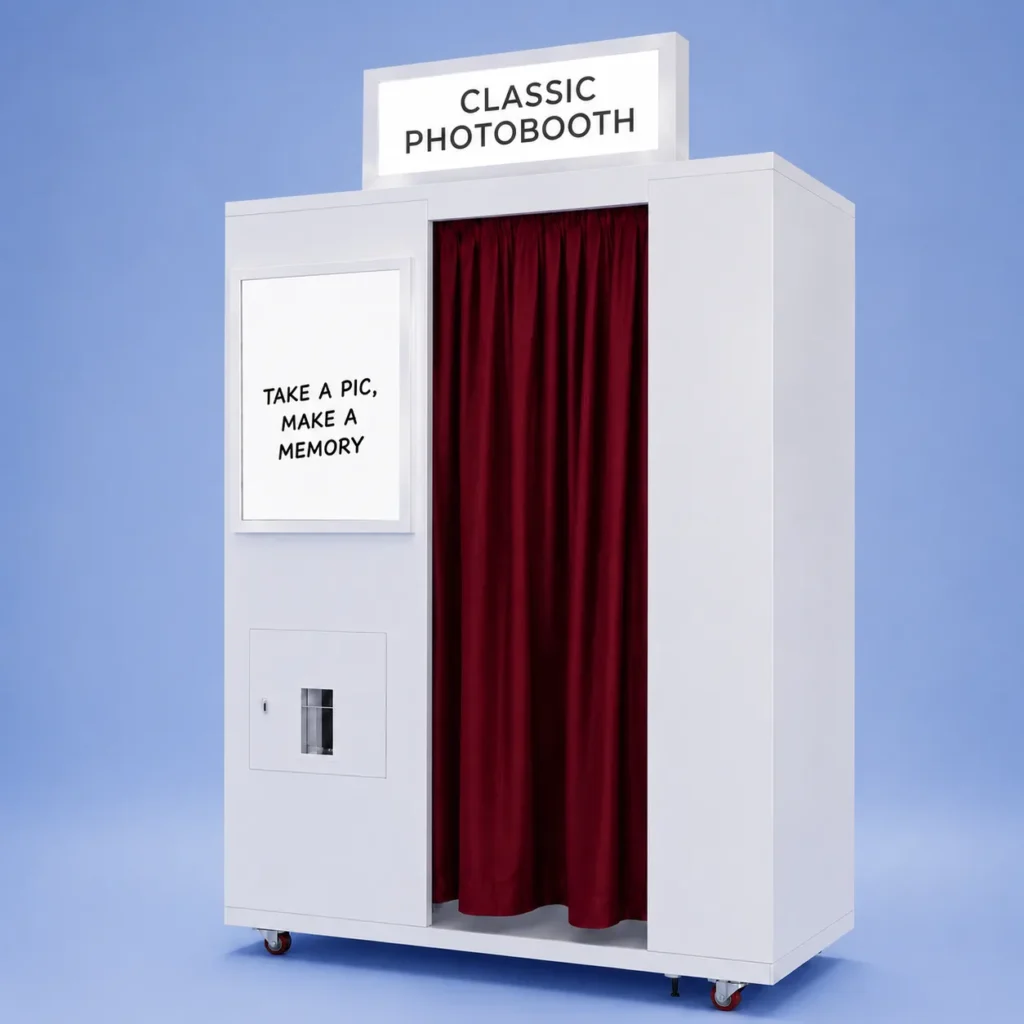
Florida Rule 12A-1.041 treats photographers as sellers of tangible personal property, and finished photographs are taxable. A photo booth is, honestly, an automated photographer with a curtain. The strip that drops out of the slot is a finished photograph.
That’s why we’d push back on anyone who calls a booth session a pure service. Instead, plan on collecting tax from day one. The math for backing it out of your receipts gets its own guide on Florida sales tax on vending machines, including a worked example.
Your vending machine license Florida checklist
We built this table from the three sources above, so every row traces back to a rule. It’s the list we’d hand a friend who just bought their first booth.
| Item | What it covers | Who to ask | Source |
|---|---|---|---|
| Sales tax registration | Collecting and sending tax on booth sales | Florida Department of Revenue | 212.0515 |
| County coverage | Each county where a machine operates | Florida Department of Revenue | 212.0515 |
| Local business tax receipt | The machines on a premises, counted at the daily high | City and county tax offices | 205.0537 |
| Who handles that receipt | Your booth in someone else’s venue | The venue owner, in writing | 205.0537 |
| The right divisor | Backing tax out of all-in receipts | Your CPA | 212.0515 |
| Prints treated as taxable | Strips sold like finished photographs | Your CPA | 12A-1.041 |
| Records per machine | Proof of what each booth took in, by county | Your bookkeeper | Good habit |
Seven rows. None of them requires a lawyer on retainer, though a CPA visit before launch is money well spent.
What you probably don’t need
Half the stress in this business, in fact, comes from imagined paperwork. So let’s clear some of it.
- A franchise or a route purchase. Nobody has to sell you permission to run a machine.
- Food rules built for snack machines. Snack and drink operators have food questions to research. A booth sells prints, not food, so that homework doesn’t fit the same way. Still, ask your county.
- The food and beverage divisor. Prints fall under other tangible personal property, which uses a different column.
- A paid consultant before you own a machine. Rather, one call to DOR and one to your local tax office will teach you more.
That said, rules change and counties differ. Treat this list as a starting point for your questions, not a final answer.

Where the booth sits changes the conversation
Here’s a defended opinion: the filings are the easy part. Venue approvals are the real work.
Our first placement, at Nova Southeastern University, proves it. No tax form slowed us down. Instead, the months went into planning and into talks with university departments about the exact spot in the building. In fact, the state paperwork felt like an afternoon by comparison.
No statute asked those questions. A venue did, though. So budget time for what a landlord, a campus or a hotel will want to know, because their list is often longer than the state’s. Also, expect someone to ask who owns the tax side. Having your DOR registration done lets you answer in one sentence. You can see how that first booth turned out on our NSU location page.
Paperwork sorted? Now pick the machine.
The SmileMore Classic is built in our Davie office and tested before delivery, with a Florida team on the phone after. Tell us where it’s headed and we’ll send a quote.
A sane order of operations
If we were starting from zero tomorrow, this is the sequence we’d follow:
- Choose the county where your first booth will operate.
- Then open your DOR sales tax account before any guest pays.
- Call your city and county tax offices about a local business tax receipt.
- If the booth goes in someone else’s space, agree in writing who handles that receipt.
- Set up records that separate each machine and each county.
- Confirm your divisor with a CPA, then put your filing dates on a calendar.
For the bigger picture on picking machines and landing a first spot, read Thomas’s first-year playbook for new booth operators. He wrote it from experience, mistakes included. More on who we are lives on our about page.
Frequently asked questions
Does the machine count change if a venue adds a claw machine next to my booth?
It can. Statute 205.0537 uses the peak count on a single day, not a monthly average. So tell your venue before you add or swap machines, and agree in writing who keeps the receipt current.
Can I wait until the booth is making money to register?
We wouldn’t. Sales tax applies to booth sales from the first one, and willful noncompliance can be charged as a misdemeanor. Registering first costs you an afternoon and saves you an awkward letter.
Does adding a second booth in a new county change my filings?
It can. Statute 212.0515 organizes vending registration by county, so a booth in a new county is a different question from a second booth down the hall. Ask the Department of Revenue how your setup should be listed before you expand.
Is a vending machine license Florida requirement different for photo booths than snack machines?
The sales tax framework is the same statute, but the divisor column differs because prints are tangible personal property, not food. Snack operators also face food questions that a print booth doesn’t raise in the same way. Still, confirm the details for your county with DOR or a CPA.
Picture the first Friday night: a group of four squeezes behind the curtain, the flash pops three times, two strips drop, and somebody yells “again.” Your filings are already done, so all you do is watch. If that’s the version you want to build, ask us for a SmileMore Classic quote.